
6 Common Problems Solved by a Complete Auto Transmission Rebuild
Few automotive issues trigger as much immediate dread as a failing drivetrain. Whether you experience a sudden lurch while merging onto the highway, hear an unsettling metallic whine from beneath the floorboards, or spot a dark red puddle on your driveway, transmission trouble demands prompt attention. According to CarTalk, a vehicle's transmission is engineered to survive for the car's full lifespan, which averages roughly 250,000 miles. However, extreme driving conditions, heavy towing, skipped fluid services, and normal mechanical wear can cause internal components to degrade long before your odometer hits that milestone.
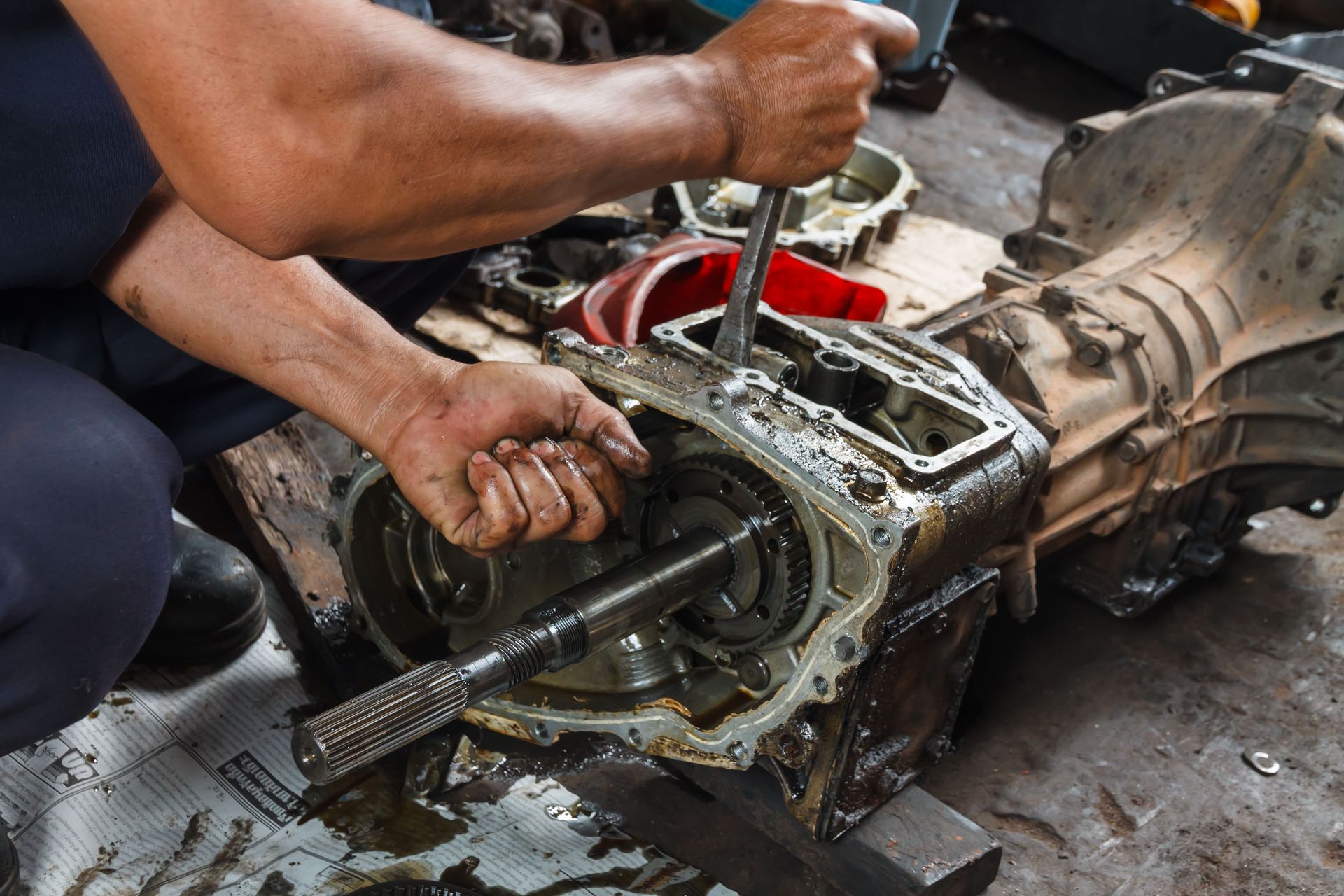
When facing widespread internal damage, minor adjustments or fluid flushes often act as temporary band-aids rather than permanent fixes. Instead of paying for repeated patchwork repairs or absorbing the massive expense of a brand-new factory unit, a complete auto transmission rebuild offers a reliable, cost-effective solution. By stripping the unit down to its bare housing, inspecting every hard part, and replacing all worn friction materials and seals, technicians restore your vehicle to peak factory performance.
1. Eliminating Persistent Gear Slippage
Gear slippage is one of the most dangerous and frustrating symptoms of drivetrain failure. When a transmission slips, it unexpectedly drops out of gear while you are driving, or it struggles to stay engaged when you press the accelerator. You will likely notice your engine RPMs suddenly spiking without a corresponding increase in vehicle speed, leaving you without power when passing or climbing hills. This issue typically stems from worn-out clutch plates, stretched or damaged transmission bands, or a drop in internal hydraulic pressure caused by failing seals.
Because these friction components sit deep inside the assembly, external adjustments rarely provide a lasting cure. During an auto transmission rebuild, technicians completely disassemble the clutch packs, remove glazed or worn friction discs, and install brand-new OEM-grade clutch plates and bands. They also verify hydraulic line pressures across every circuit, ensuring that each gear locks firmly and reliably into place under heavy engine load.
2. Stopping Rough, Delayed, or Erratic Shifting
A healthy automatic transmission transitions between gears so seamlessly that you barely notice it happening. When internal components begin to fail, that smooth delivery disappears, replaced by harsh clunks, noticeable hesitation when shifting from Park into Drive or Reverse, or erratic "gear hunting" at cruising speeds. These symptoms usually point to a clogged valve body—the hydraulic brain of the transmission—or failing electronic shift solenoids that regulate fluid routing.
Over time, microscopic metal shavings and sludge accumulate inside the intricate fluid passages of the valve body, causing valves to stick and disrupting precise shift timing. Opting for a thorough automatic transmission rebuild resolves these shifting anomalies at their source. Specialists ultrasonically clean the entire valve body, replace worn valves and springs, and install fresh shift solenoids and pressure sensors. Once reassembled and recalibrated, the unit regains the crisp, predictable, and smooth shifting characteristics your vehicle had when it first rolled off the assembly line.
3. Silencing Grinding, Whining, and Clunking Noises
Unusual noises coming from beneath your vehicle are a clear warning sign that mechanical components are wearing against each other. Depending on the underlying fault, you might hear a high-pitched whining or buzzing sound that rises with engine speed, or a heavy metallic grinding, humming, or clunking noise when the vehicle shifts. Whining often indicates a starved or failing fluid pump, while grinding and clunking typically point to worn planetary gear sets, pitted bearings, or damaged thrust washers creating destructive metal-on-metal friction.
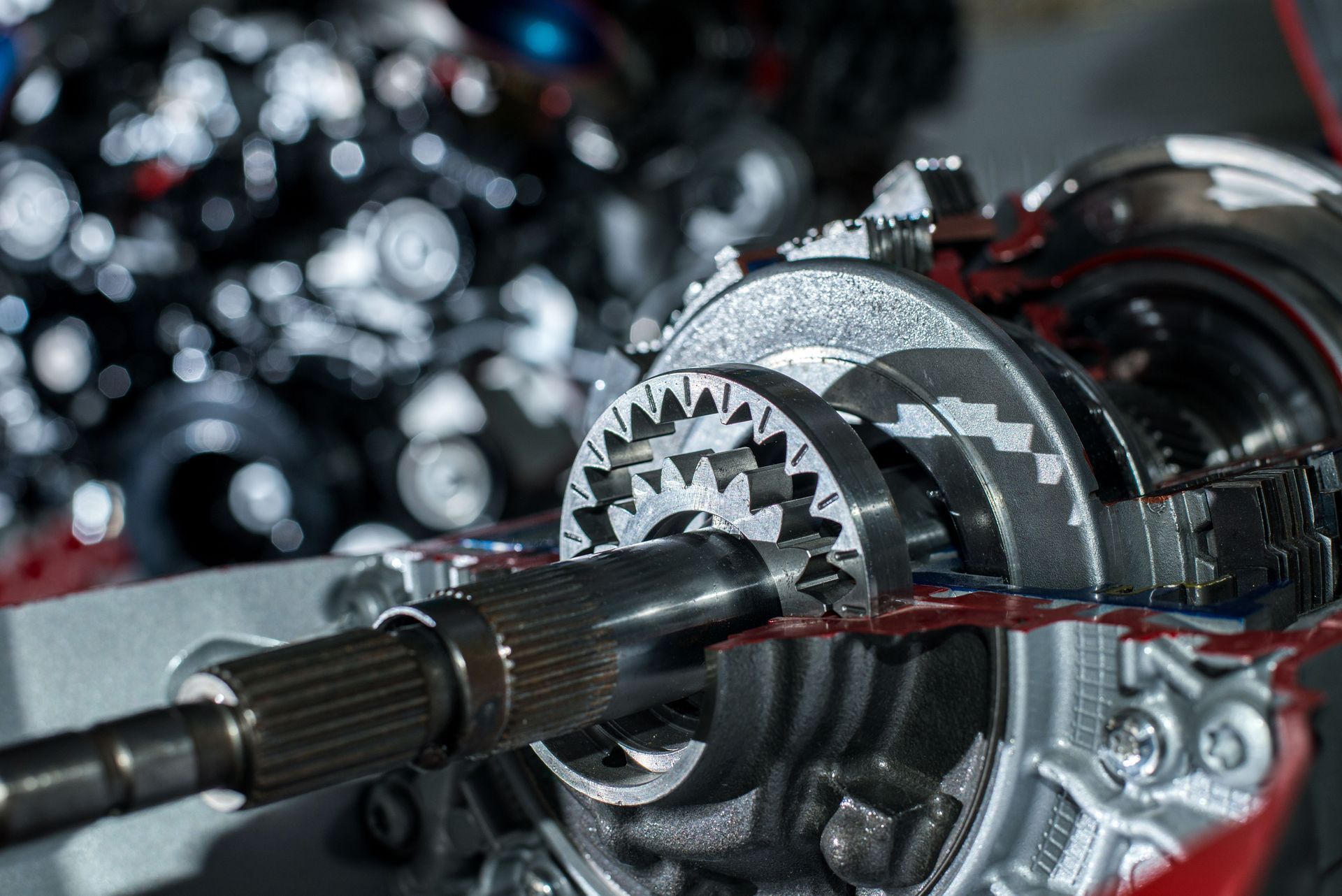
Ignoring these sounds allows metal debris to circulate throughout the system, rapidly destroying adjacent parts. A comprehensive auto transmission rebuild eliminates these alarming noises before a catastrophic mechanical seizure occurs. During the process, technicians meticulously measure every planetary gear, sun gear, carrier, and bearing against strict factory tolerances, replacing any scarred or out-of-spec hardware so the entire gear train operates quietly and smoothly.
4. Fixing Chronic Transmission Fluid Leaks
Unlike engine oil, which slowly burns off over thousands of miles, automatic transmission fluid operates inside a closed hydraulic system and should never drop in level. If you notice bright red or dark brown fluid pooling beneath the center of your car, you have an active leak that threatens the health of your entire drivetrain. Low fluid levels starve the system of vital lubrication and hydraulic pressure, quickly leading to severe overheating and internal damage. Over years of exposure to extreme operating temperatures, rubber gaskets, O-rings, lip seals, and pan gaskets become brittle, shrink, and crack.
Simply replacing one accessible outer seal often leads to another leak springing up months later as neighboring seals fail. Choosing an auto transmission rebuild solves chronic leaks permanently because every standard overhaul kit includes a 100% replacement of all soft parts. Technicians replace every internal and external seal, gasket, and O-ring throughout the housing, guaranteeing a completely sealed, leak-free system.
5. Resolving Overheating and Burning Smells
Heat is the single greatest enemy of an automatic transmission. If you ever catch a distinct, sweet-yet-acrid burning odor coming from under the hood—especially after sitting in stop-and-go traffic or hauling a heavy load—your transmission fluid is likely overheating and breaking down. Once fluid exceeds its thermal limits, it loses its lubricating viscosity, turns dark brown or black, and allows internal friction to skyrocket. This runaway heat quickly warps steel plates, scorches clutch linings, and degrades electronic wiring harnesses inside the case.
Merely draining and refilling burnt fluid will not repair the heat-damaged components left behind. An auto transmission rebuild completely resets the thermal baseline of your drivetrain. Technicians discard all heat-damaged clutch packs, flush the transmission cooler and cooler lines to remove trapped debris, and fill the freshly built unit with clean, high-grade synthetic fluid so it runs cool and protected under demanding driving conditions.
6. Correcting Torque Converter Shudder and Stalling
Sometimes the root cause of poor drivability lies not in the main gear set, but in the fluid coupling connecting your engine to the transmission. If your vehicle develops a rhythmic vibration between 35 and 50 mph that feels just like driving over highway rumble strips, you are likely experiencing torque converter shudder. Similarly, if your engine bucks and stalls when you come to a complete stop at a traffic light, the torque converter clutch may be failing to disengage properly.
Inside the converter, worn needle bearings, damaged turbine fins, or a glazed lock-up clutch lining prevent smooth power transfer from the crankshaft. Because the torque converter is a sealed unit, it cannot be patched while installed in the vehicle. A complete auto transmission rebuild addresses this critical component directly by installing a fully remanufactured or brand-new torque converter alongside the refreshed transmission, eliminating annoying highway vibrations and preventing sudden stalls at intersections.
Dealing with drivetrain issues does not mean you have to empty your savings account on a brand-new car or gamble on an untested salvage-yard replacement. By addressing worn friction plates, clogged valve bodies, failing bearings, brittle seals, and converter defects all at once, a professional
auto transmission rebuild restores complete mechanical integrity and extends the life of your vehicle for tens of thousands of miles.
Don't let transmission trouble leave you stranded on the side of the road or turn into a much costlier total replacement. Contact the specialists at RJ Auto today to schedule a comprehensive diagnostic inspection. Let us restore your vehicle's peak performance and give you complete peace of mind behind the wheel!

Share On: